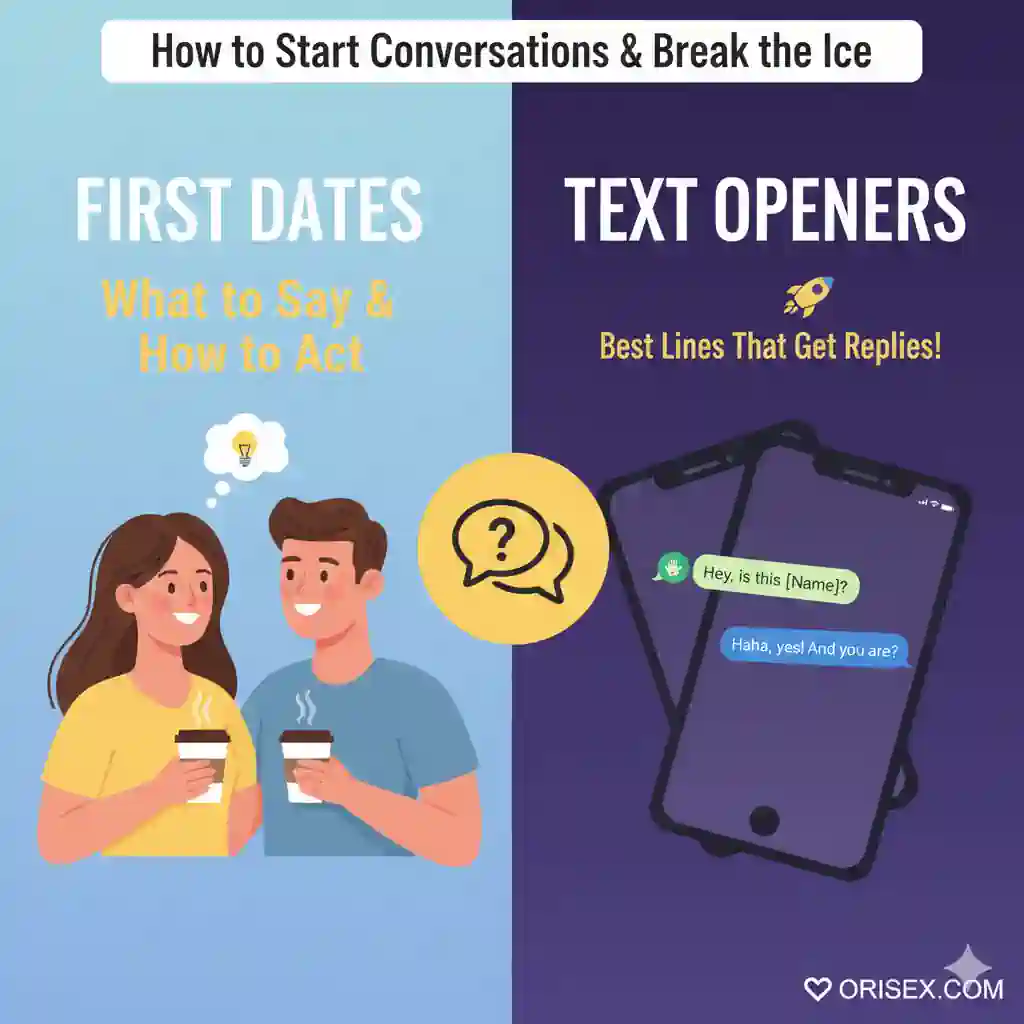
The Icebreaker Mindset: It’s Not What You Say, It’s How You Show Up
Have you ever stared at a blank text message field, fingers hovering, brain completely empty except for the dreaded “Hey…”? Or sat across from someone on a first date, grasping for anything to say beyond “So… how was your week?”
You’re not alone. Starting conversations—genuine, flowing, connection-sparking conversations—feels like a superpower some people are born with. But here’s the secret: it’s not about being clever or witty. The most important rule is simple yet transformative: Choose curiosity over coolness.
Research in social psychology shows that people who approach interactions with genuine curiosity are perceived as more likable and competent. When you focus on being “impressive,” you’re in your head. When you focus on being “interested,” you’re connecting with the person in front of you.
The anatomy of a great opener has three traits:
- Low-Pressure: It doesn’t demand a heavy emotional or intellectual lift.
- Open-Ended: It can’t be answered with a simple “yes,” “no,” or “fine.”
- Observation-Based: It roots the conversation in your shared reality.
Before you even speak, your body language is your first opener. An open posture (uncrossed arms), steady (not staring) eye contact, and a relaxed “social smile” signal warmth and approachability. Remember, the goal isn’t perfection—it’s connection.
The Modern Text Opener Playbook: Move Beyond “Hey”
The digital first impression is crucial. Your opener sets the entire tone. Ditch the generic and embrace these proven frameworks.
1. The Observational Opener (The Most Effective)
This uses something from their profile as a springboard. It shows you paid attention.
- Example: “Your photo at Machu Picchu is incredible! Was the hike as brutal as it looks, or was the view worth every step?”
- Why it works: It’s specific, personal, and asks for a story.
2. The Question Opener (Fun & Low-Stakes)
Ask something playful that reveals personality.
- Example: “Important question to see if we’re compatible: what’s your ultimate breakfast sandwich build?”
- Why it works: It’s unexpected, easy to answer, and sparks playful debate.
3. The Shared Context Opener
Reference how you matched or your shared situation.
- Example (from a dating app): “Our profiles both say we’re obsessed with Thai food. I’m conducting vital research: best pad thai in the city, go!”
- Why it works: It creates instant common ground.
🚫 Texting Traps to Avoid:
- The Over-Compliment: “You’re the most beautiful woman I’ve ever seen.” (Too much, too soon, feels impersonal).
- The Generic: “Hey” “How’s it going?” (Low effort, low return).
- The Interview: “What do you do? Where are you from? What are your hobbies?” (Feels like a form to fill out).
Pro-Tip: Great conversations often happen in inspiring spaces. Looking to create a conversation-friendly atmosphere at home? Check out 12,000 exclusive wall art designs ready to set the perfect mood and showcase your personality. Explore the collection at ostadmaroc.com/2025/10/12000-exclusive-wall-art.html.
First Date Conversation: From Awkward to Effortless
You’ve made it to the date. Now, how do you turn small talk into real connection? Use the Golden Framework: Past, Present, Future. This structure creates a natural, flowing narrative about their life.
The Golden Framework:
- Past (The Foundation): “What brought you to [this city]?” or “What was your first job, and what did it teach you?”
- Present (The Energy): “What’s a project or hobby that’s consuming your positive energy right now?” (This is better than “How’s work?”).
- Future (The Dreams): “Any restaurant, trip, or skill that’s at the top of your list to try in the next year?”
Master the Art of the Follow-Up: Listen for keywords and dig one layer deeper.
- Them: “I moved here for a job in graphic design.”
- You: “What was the moment you realized design was the path for you?” (Instead of just “Cool, where do you work?”)
Balance Share & Ask (The 50/50 Rule): After they answer, offer a related piece of your own experience before asking the next question. This builds vulnerability and reciprocity.
- “That’s amazing you lived in Spain. I did a semester in Italy and spent most of my time trying (and failing) to make fresh pasta. What was your favorite everyday moment there?”
Graceful Topic Shifts (For When You Hit a Lull):
- The Pivot: “That reminds me of something totally different I wanted to ask you…”
- The Environmental Save: “This music is giving me strong 2008 vibes. What was your embarrassing middle school music phase?”
The Social & Networking Toolkit: For Parties, Events & Cold Approaches
Walking up to someone new in person is daunting. Use The Universal Trio: Compliment > Context > Question.
- Formula in Action: “I love your jacket (Compliment). I was just debating getting another coffee (Context). What’s good here? (Question).”
- Why it works: It’s natural, gives a reason for talking, and immediately hands the conversation over to them.
The “You Seem” Opener (A Powerful Psychological Tool): This mild “cold read” makes people feel seen.
- “You seem like you’ve been to one of these mixers before.”
- “You seem like someone who knows the best hiking trails around here.”
- People will instinctively confirm or correct you, starting a natural dialogue.
Exiting Gracefully: The end of a conversation is just as important. Don’t ghost mid-circle.
- The Appreciation Exit: “It was so great talking to you about [specific topic]. I’m going to grab another drink, but I’ll catch you later!”
- The Connection Exit: “I don’t want to monopolize you, but I’d love to continue this. Can I grab your Instagram/LinkedIn?”
Looking to turn your social skills into income? Mastering conversation is just the beginning. Learn how to build profitable digital products around your expertise. Discover the blueprint at XMONEYACADEMY.COM.
Keeping the Momentum: The Bridge to Deeper Connection
Read the Signs:
- Engaged: Leaning in, maintaining eye contact, asking you questions back, elaborating on answers.
- Disengaged: Short answers, glancing around the room, closed body language, not reciprocating questions.
From Small Talk to Big Talk: Gently introduce more personal topics once a rhythm is established.
- Try the “Peeling the Onion” Method: Start broad, then get gradually more personal based on their comfort.
- Example Flow: Travel (What’s your favorite place?) → Experience (What made it meaningful?) → Feeling (Do you seek trips for adventure or relaxation?).
The “Listen for the Seed” Technique: The best conversations come from picking up on tiny clues they drop.
- Them (casually): “Yeah, my weekend was okay, just prepped for my pottery class.”
- You (later): “Earlier you mentioned pottery class—is that a new creative outlet, or have you always been into working with your hands?”
- This shows profound listening and care.
Conclusion: Practice Makes Conversational
Starting a conversation is a skill, not an innate talent. Everyone feels a little nervous. Your true goal is not to be the most interesting person in the room, but to be the most interested.
Remember: You aren’t starting from scratch; you’re starting from experience. Every interaction is practice. For more on building resilience and self-knowledge that makes you a more confident connector, revisit our guide on The Road Back to You: How to Heal After a Breakup in 5 Steps. True social confidence starts from a foundation of self-awareness.
Call to Action: Your turn! Which opener will you try first—the Observational Text or the Past/Present/Future Framework? Share your plan or your own best icebreaker in the comments below. Let’s learn from each other.